

 English
 中文简体
中文简体

Content
When you head to the shore on a blazing summer day, the first thing you look for is shade. That large, colourful canopy stuck into the sand — the one shielding you from the sun — goes by several names depending on where you are in the world and what it's designed to do. Understanding the terminology helps you shop smarter, communicate clearly with rental staff, and pick the right product for your needs.
The most common name: beach umbrella
In everyday American and British English, the standard term is simply beach umbrella. It covers any large, pole-mounted canopy designed for use on sand or at an outdoor recreational area. The term is intuitive and universally understood by shoppers, retailers, and vacation rental services alike.
Other names you'll encounter
The object has picked up a range of alternate names over the years, each reflecting a slightly different use case or regional convention:
- Sun umbrella — Emphasises UV protection over rain shelter. Common in European markets and sunscreen-adjacent branding.
- Parasol — From French para (shield) + sol (sun). Used for both handheld and pole-mounted versions in Romance-language countries and high-end resort contexts.
- Ombrellone — Italian for "big umbrella." If you've rented a sun lounger on an Italian beach, the large canopy above you was an ombrellone — a term now used in design catalogues globally.
- Patio / market umbrella — Structurally similar but built for hard surfaces. Anchored in a weighted base rather than sand. Used at cafés, poolsides, and outdoor dining areas.
- Cantilever / offset umbrella — The pole extends from the side rather than through the centre, allowing full use of the shaded space beneath. Popular in luxury resort settings.
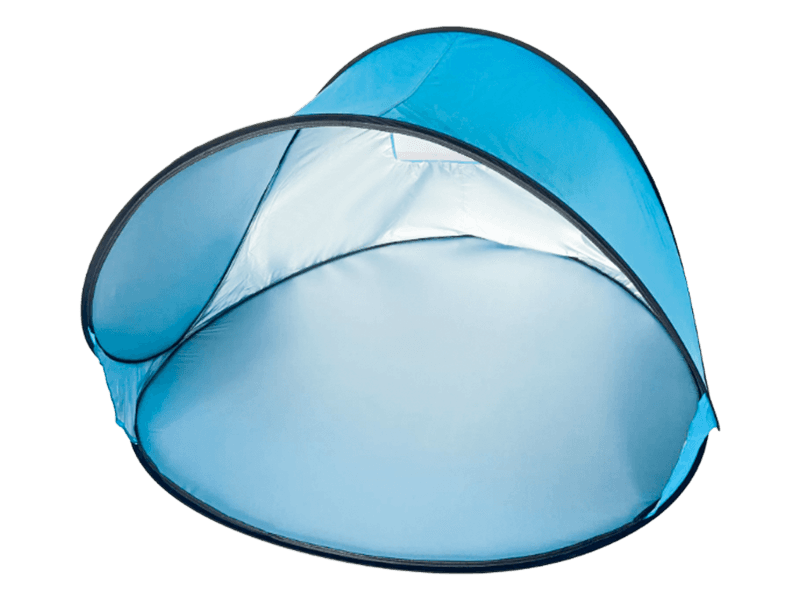
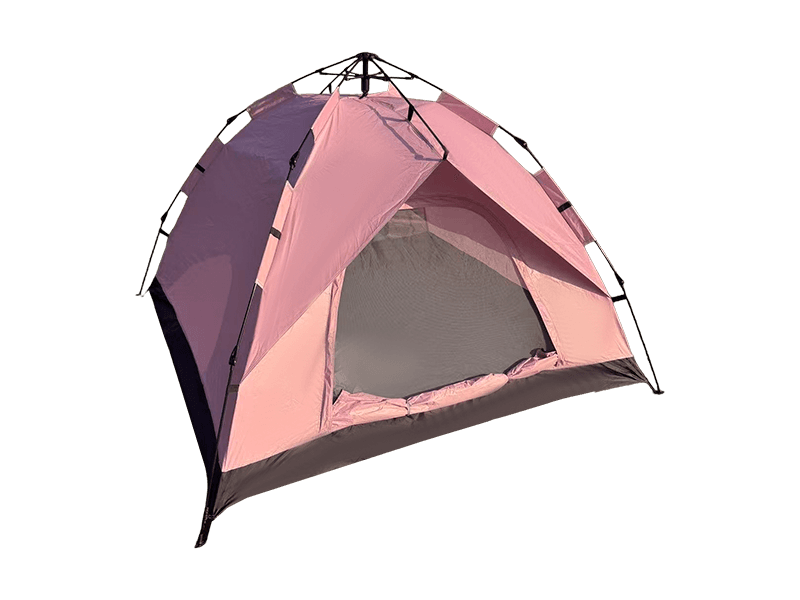
- Shade tent / pop-up canopy — Technically a different product (four-legged, larger footprint), but serves the same purpose and is increasingly used as a family-sized alternative to a beach umbrella.
Key structural parts of a beach umbrella
Knowing the anatomy helps when comparing products or reading spec sheets. A standard beach umbrella consists of the following parts:
- Canopy — The large fabric shade surface, ideally made from a UPF-rated material to block ultraviolet rays.
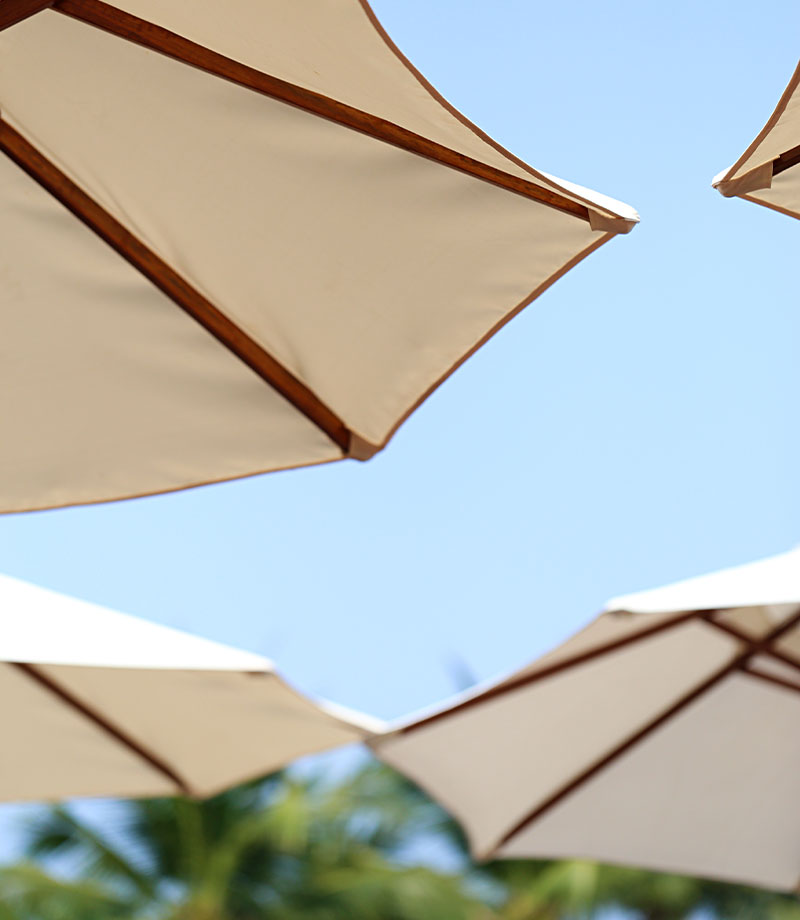
- Hub and ribs — The central joint at the top of the pole from which the canopy ribs radiate outward, holding the canopy open.
- Tilt joint — A locking mechanism partway down the pole that lets you angle the canopy toward the sun for better shade coverage.
- Pole — The vertical support shaft, typically made from fibreglass, aluminium, or steel.
- Sand anchor / spike — The pointed or screw-in tip at the base of the pole that is driven into the sand to hold the umbrella upright.
How to choose the right beach umbrella
The name matters less than the specs. Here are the factors that actually affect your experience:
UPF rating
Look for UPF 50+ on the canopy fabric. Not all beach umbrellas block UV equally — a dark, tightly woven polyester canopy outperforms a loose cotton one even if both look similar.
Canopy diameter
A 6 ft (180 cm) canopy suits one or two people. For families, aim for 7–8 ft. Diameter is measured tip-to-tip along the ribs, not the shaded ground area.
Pole material
Fibreglass flexes in wind without snapping — ideal for exposed beaches. Aluminium is lighter and rust-resistant. Steel is heavy but very stable.
Wind resistance and anchoring
A poorly anchored beach umbrella becomes a dangerous projectile in gusty conditions. Use a screw-in sand anchor, bury the pole at least 18 inches deep, and tilt into the wind. Look for models with a vent at the top of the canopy to reduce lift.
Beach umbrella vs parasol: is there a difference?
In strict historical usage, a parasol is a handheld sunshade — lightweight, decorative, often made of lace or satin — while a beach umbrella is a freestanding pole-mounted structure. In modern retail, however, the boundary has blurred. Many high-end brands use "parasol" to position their products as more stylish or resort-quality, even when describing a standard pole-and-canopy design. When buying online, always check whether the product includes a stand, a sand spike, and a tilt mechanism — those details matter more than the name on the label.
Regional name differences at a glance
The same product is known by different names across languages and regions:
- United States / Australia: Beach umbrella — the most common everyday term.
- United Kingdom: Beach umbrella or parasol — both terms used interchangeably.
- Italy: Ombrellone — literally "big umbrella."
- France / Spain: Parasol de plage — de plage meaning "of the beach."
- Germany: Sonnenschirm — literally "sun screen" or "sun shade."
Safety tip: secure it properly
According to the U.S. Consumer Product Safety Commission, beach umbrella-related injuries affect thousands of beachgoers each year, most caused by unsecured umbrellas becoming airborne in wind. Regardless of what you call it, the safety rules are the same: screw or push the anchor at least 18 inches into the sand, tilt the canopy into the prevailing wind at roughly 30–45 degrees, and close or remove it if sustained winds exceed 20 mph (32 km/h).
Bottom line
A beach umbrella, parasol, ombrellone, or sun umbrella — they all refer to the same fundamental product: a large canopy on a pole designed to shield you from the sun at the beach or poolside. The name that matters most is the one used by the retailer or rental service you're dealing with. What matters more is the UPF rating, canopy size, pole durability, and how securely it anchors into the sand. Armed with both the terminology and the specs, you're set for a comfortable, safely shaded day at the shore.
```