

 English
 中文简体
中文简体


Content
What an Autism Tent Is Built to Do
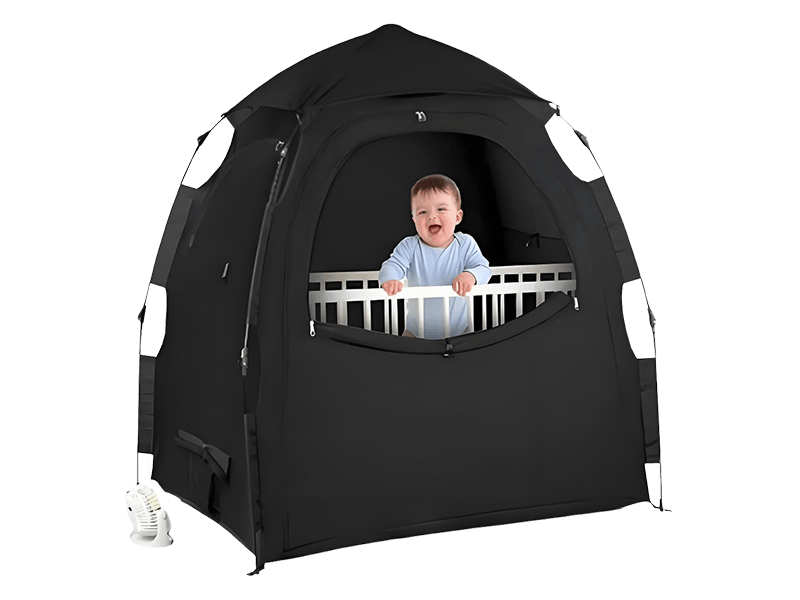
An autism tent is a small enclosed fabric space designed to give a person on the autism spectrum, or anyone with heightened sensory sensitivity, a place to step away from bright light, background noise, and visual clutter without leaving the room entirely. When external information becomes overwhelming, having a predictable and controllable space to retreat to can make a noticeable difference in how quickly someone recovers from sensory overload. Rather than functioning purely as a play structure, the tent works as a tool for emotional regulation, giving the user a defined boundary they can enter and exit on their own terms.
The interior is kept deliberately simple, with soft, soothing tones and calm patterns rather than busy prints or high-contrast graphics that could pull attention away from the goal of settling down. A plain, low-stimulation interior tends to support relaxation more consistently than a tent decorated with bright characters or bold shapes, since visual clutter can work against the calming effect the space is meant to provide.
Fabric and Soundproofing Qualities
The fabric used in an autism tent typically combines a soft, skin-friendly outer layer with a denser inner lining that helps dampen sound transmission. This layered construction blocks a meaningful portion of external noise, which matters for someone whose nervous system reacts strongly to sudden sounds like slamming doors, classroom chatter, or a vacuum cleaner running nearby. The same fabric also filters excessive light coming through the tent walls, keeping the interior dim and enveloping without making it completely dark, which some users find more comfortable than a pitch-black enclosure.
Skin contact plays just as important a role as sound and light control. Fabrics chosen for these tents are usually brushed or napped on the interior surface to avoid the rough seams or scratchy textures that can cause discomfort for someone with tactile sensitivity. Environmentally friendly dyes and finishing processes are also common, since chemical residue from certain fabric treatments can trigger a reaction in individuals who are sensitive to strong smells.
A Support Structure Without Metal Frames
Many autism tents rely on a soft support structure rather than rigid metal poles, using flexible fiberglass rods encased in fabric sleeves or a padded internal frame that holds its shape without hard edges. This reduces the risk of injury if a child leans, presses, or falls against the tent wall, and it also prevents the rattling or clicking noises that a loose metal frame can produce when bumped, which would otherwise interrupt the quiet the tent is meant to provide. A soft-framed design generally feels less clinical too, closer to a nest or a blanket fort than an equipment structure, which can help a child treat the space as somewhere to relax rather than somewhere they were placed for a task.
Simple, Distraction-Free Design
The exterior and interior panels generally avoid complex stitching patterns, printed logos, or multiple contrasting colors, since a cleaner surface gives the eye less to process while someone is trying to calm down. A single muted color or a gentle two-tone combination is common, chosen specifically to avoid competing with the calming purpose of the space.
Adjustable Ventilation and Self-Regulation
A mesh ventilation window that can be opened or closed by the user is one of the more practical features built into these tents. Being able to control airflow and the amount of visual connection to the outside room gives the child a small but meaningful choice to make on their own, which supports the broader goal of teaching self-regulation rather than having every aspect of the environment controlled by an adult. Closing the window fully increases the sense of enclosure during a moment of high stress, while opening it partway lets in air and a sliver of outside light once the person is ready to reconnect with the room.
This kind of independent control mirrors a common goal in occupational therapy, where a child is gradually encouraged to recognize their own sensory state and take an action to address it, rather than depending entirely on a caregiver to notice distress and intervene. A tent with an adjustable window turns a passive retreat into a small practice ground for that skill.
Common Sizes and Where They Fit
Sizing generally falls into a few practical ranges depending on the user and the space available. A compact tent around 100 x 100 x 135 cm suits a single young child and tucks into a bedroom corner or a small classroom nook. A mid-size version near 150 x 150 x 140 cm leaves room for a child plus a few cushions or a caregiver nearby, which fits well in a therapy office or a designated quiet corner in a classroom. Larger versions reaching 180 x 180 x 150 cm or more can hold a teenager or an adult along with supportive items such as a floor cushion or weighted blanket.
| Size Category | Approximate Dimensions | Suggested Setting |
|---|---|---|
| Compact | 100 x 100 x 135 cm | Bedroom corner, small classroom nook |
| Mid-size | 150 x 150 x 140 cm | Therapy room, school quiet corner |
| Family / Adult | 180 x 180 x 150 cm or larger | Living room, sensory gym |
Everyday Applications and Use Cases
At home, a tent set up in a bedroom or playroom often becomes a familiar wind-down spot after school, when the accumulated sensory input from a full day of transitions and social demands builds up over the course of the day. Because the space stays in the same place with the same soft texture and dim lighting every time, it gives a child a predictable environment to return to, which itself can be calming compared to a space that changes day to day.
In classrooms, teachers sometimes place a tent in a quiet corner as part of a broader sensory station, letting a student step inside for a short break during a lesson without leaving the room. This keeps the student within view of the teacher while still reducing the sensory load enough for them to settle and return to group activities afterward. In therapy and rehabilitation settings, a tent can be used between structured exercises to give a brief regulation break, or as a calming environment where a therapist introduces new skills in a setting the child already associates with safety.
Maintenance and Everyday Care
Because the fabric sits close to skin and gets used daily in some settings, wiping it down periodically with a damp cloth and mild soap helps keep it fresh, followed by full air-drying before folding to avoid mildew forming in the creases. Repeated folding and unfolding puts gradual stress on seams and any fabric-sleeved poles, so a tent used every day in a classroom or clinic often shows wear sooner than one used occasionally at home, though the soft frame design generally holds up longer than rigid metal alternatives since there are fewer joints to loosen over time.
Storing the tent in a wide-opening bag rather than compressing it tightly helps the fabric sleeves and internal supports keep their shape between uses, which in turn keeps the ventilation window and entrance flap functioning smoothly for longer.