

 English
 中文简体
中文简体

Content
- 1 Why Shelter Outranks Fire, Water, and Food
- 2 The Core Bushcraft Shelter Types Worth Learning
- 3 Site Selection Decides the Shelter Before You Build It
- 4 Build Rules That Separate Real Shelters from Brush Piles
- 5 Where Manufactured Tents Belong in a Bushcraft Skill Set
- 6 Emergency Shelters When Nothing Can Be Built
A night of sleet near 4°C with a stiff wind can push an unsheltered person toward hypothermia in two to three hours. That math is why experienced outdoors people rank shelter ahead of fire, water, and food in nearly every survival scenario. Bushcraft survival shelters — structures built from the materials around you, using a knife and knowledge instead of factory poles and a flysheet — are the skills that make that priority workable. This article walks through the shelter types worth learning, the siting and build rules that separate working shelters from brush piles, and the point at which a packed tent is simply the better tool.
Why Shelter Outranks Fire, Water, and Food
Survival instructors use the rule of threes to set priorities: roughly three minutes without air, three hours without protection in harsh weather, three days without water. Exposure sits near the top because it kills faster than almost anything else you can control. Fire matters, but a fire without wind protection and a dry platform underneath often goes out with the first squall.
A shelter does four jobs: it blocks wind, sheds rain and snow before you get wet, traps a layer of still air, and separates you from the ground. The last job matters more than beginners expect — in cold conditions the ground strips heat from your body faster than the air does. Bedding is not a comfort item; it is half the shelter. Any structure, built or bought, that ignores ground insulation will fail even with an otherwise well-built roof.
The Core Bushcraft Shelter Types Worth Learning
Each design below solves a slightly different problem. Learn the shared logic — a strong ridgepole, ribs, layered debris — and you can improvise variations instead of memorizing blueprints.
Debris Hut
The debris hut is a widely taught one-person emergency shelter. A sturdy ridgepole runs from a fork or stump down to the ground at about knee height, sapling ribs lean against both sides, and the frame is buried under at least 60 centimeters of dry leaves, fern, or pine needles. Inside, you occupy a cavity barely larger than your body, crawl in, and plug the entrance with a bundle of debris. Done right, it holds body heat the way a sleeping bag does. It is labor-intensive — expect one to three hours of gathering — and it depends entirely on dry material, which is why it shines in autumn hardwood forest and fails in soaked brush.
Lean-To
A lean-to is a single sloped roof: a ridgepole lashed between two trees with boughs, bark, or brush layered on one side. It is one of the quicker serious shelters to build, often inside an hour, and its open front faces away from the wind and toward a long fire that reflects warmth onto you. The trade-off is one-sided protection; if the wind swings, you wear the weather.
A-Frame
An A-frame adds a second slope, closing the shelter into a rib cage with a small opening at one end. You give up fire integration and elbow room but gain protection from wind-driven rain on both flanks. The debris rules stay the same: shingle from the bottom up and keep the layer at least 60 centimeters thick.
Wickiup or Round Lodge
For longer stays or groups, plant saplings in a circle or cone, lash them at the top, and cover the frame with bark, grass, or thatch. Expect two to four hours of work for two people, but you gain headroom, sitting space, and room for gear.
Snow Cave or Quinzhee
In deep winter, snow itself is an effective insulator. A snow cave dug into a drift, or a quinzhee built by piling and hollowing packed snow, holds a stable interior around -1 to -5°C even when the outside air sits at -25°C. Both demand a small ventilation hole and a raised sleeping platform so the coldest air pools below you, and neither should be entered without a probe stick through the roof to guard against collapse.
| Shelter Type | Typical Build Time | Best Conditions | Main Limitation |
|---|---|---|---|
| Debris hut | 1–3 hours | Deciduous forest with deep dry leaf litter | Labor-heavy; insulation fails if debris is soaked |
| Lean-to | 30–90 minutes | Timber with strong forked supports and fire allowed | Open side gives no protection from wind shifts |
| A-frame | 1–2 hours | Colder, windier nights needing enclosed sides | Cramped interior with little room for gear |
| Wickiup | 2–4 hours | Longer stays, two or more people, standing room | Highest material and time cost among brush shelters |
| Snow cave or quinzhee | 2–3 hours | Deep, consolidated snow in stable winter weather | Needs snow depth and careful ventilation |
Site Selection Decides the Shelter Before You Build It
The best-built shelter in the wrong spot is still the wrong shelter. Spend ten minutes reading the area before cutting anything:
- Overhead hazards: dead standing limbs and leaning trunks drop without warning, especially in wind.
- Drainage: dry washes, hollows, and shorelines flash-fill; camp above the high-water line.
- Cold air drainage: valley floors and pits collect cold air at night, so a bench or slight rise often runs several degrees warmer.
- Wind: set the door at a right angle to the prevailing wind instead of facing it.
- Material inventory: confirm dry leaf litter, dead standing wood, and saplings within reach before committing to the spot.
Dead standing wood is generally drier than material found on the forest floor, conifer boughs make particularly good bedding, and sheets of bark shed rain well. Lay boughs and debris like shingles, starting at the eaves, and compress the roof twice — once when you finish and again after the first hour of settling.
Build Rules That Separate Real Shelters from Brush Piles
Failed shelters usually fail for predictable reasons:
- Size the interior to your body, not your ambitions — small cavities warm up faster.
- Push on the frame before adding debris; a collapsing frame buries your bedding with it.
- Double the bedding you think you need, because ground conduction steals more heat than most roofs leak.
- Shingle debris from the bottom up so rain runs off instead of channeling inside.
- Leave a small vent whenever a flame or candle burns inside, and never seal a snow shelter airtight.
- Finish before dark; building by night costs calories and produces errors.
Run the debris hut and the lean-to at least once in comfortable weather, with daylight to spare. Shelters built under stress for the first time rarely hold heat.
Where Manufactured Tents Belong in a Bushcraft Skill Set
The practical conclusion first: bushcraft shelter skills are insurance, and a packed tent is the policy you actually cash in. When daylight is gone, a partner is injured or exhausted, every branch within reach is soaked, or you are carrying children, spending two hours gathering wet leaves is the wrong trade. Factory-built shelters solve in minutes what built shelters solve in hours.
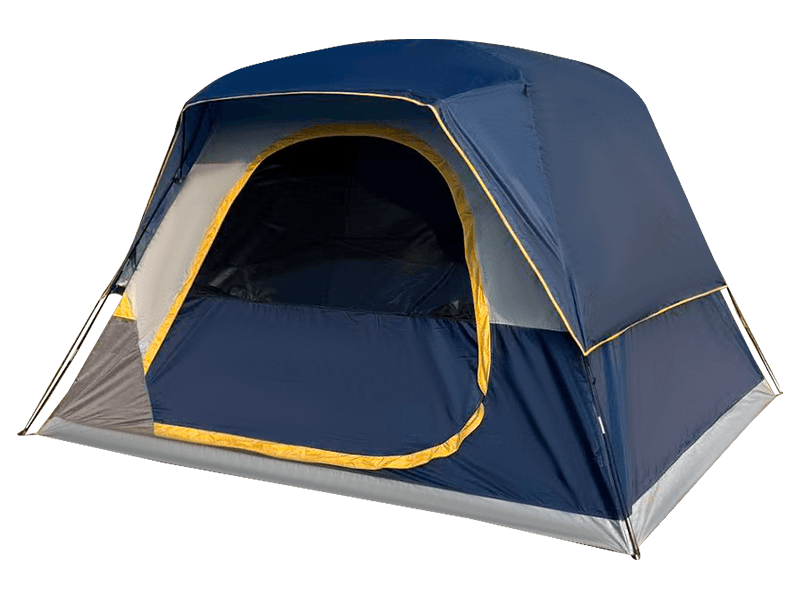
quick-setup dome camping tents that sleep three to eight people Dome-Shaped Easy-Setup Camping Tent For 3/4/6/8 PeopleA blackout dome tent with 2000mm waterproof coating, mesh ventilation, and quick pole setup. It fits here as a factory-built shelter that provides reliable protection in minutes when conditions or exhaustion make building a natural shelter impractical.View Product →
Inflatable designs push setup speed further by replacing pole work with a pump, which is why they appear everywhere from family campsites to rapid-response deployments; our overview of inflatable tents explains how these structures hold their shape and where they make sense.
Road-based trips change the picture again, because the vehicle becomes part of the shelter system. A tailgate, a windward parked body, and a tent that mounts to the vehicle turn a parking spot into a protected bedroom, which matters when the alternative is pitching on exposed ground.
waterproof and sunproof SUV car camping tents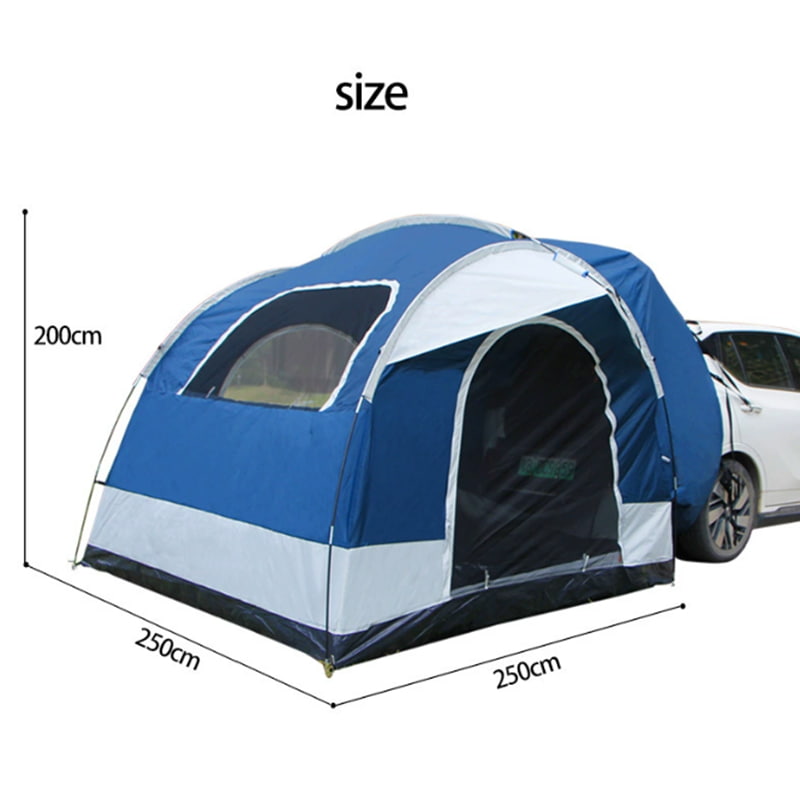 Waterproof And Sunproof SUV Car Camping TentA tear-resistant, waterproof tailgate tent that mounts to the rear of an SUV, giving direct access to the vehicle's interior. It suits road-based trips where the car itself becomes part of the shelter system on exposed ground.View Product →
From the manufacturing side, three specifications separate a dependable backup tent from fair-weather gear: a waterproof coating and fly rated for sustained rain, factory-taped or sealed seams, and genuine ventilation to limit condensation on cold nights. Weight and packed size matter less than those three, because a tent that fails on the second night of a storm is not shelter at all.
Emergency Shelters When Nothing Can Be Built
Floods, storms, and displacement change the equation: the shelter has to arrive rather than be built, in volume, by tired people. That is why relief agencies stage tents ahead of disasters, and why design priorities shift toward deployment speed, floor area, and durability under repeated pitching.
purpose-built disaster relief tents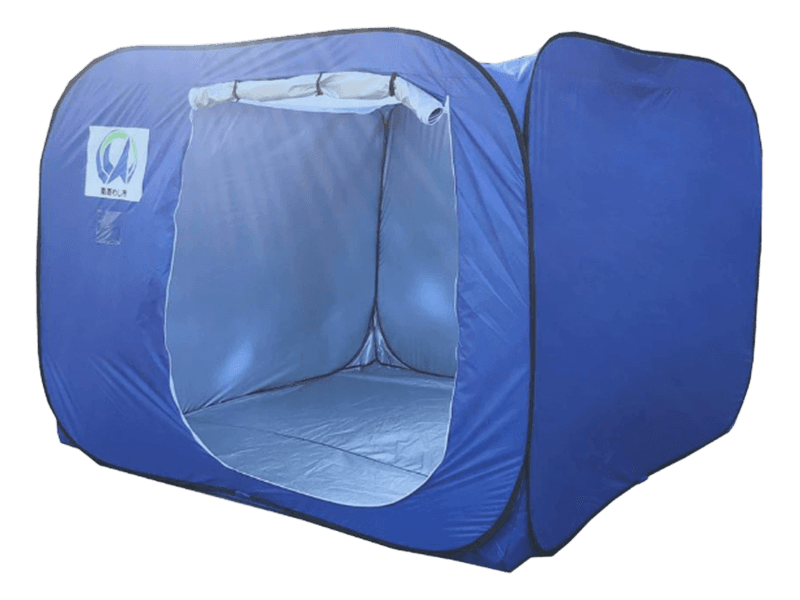 Wholesale Disaster Relief Tent ManufacturersA quick-deployment relief tent made of waterproof coated Oxford fabric with an arched wind-stable frame, ventilation windows, and large capacity. It matches the displacement scenario where shelters must arrive fast and pitch repeatedly by tired responders.View Product →
For a closer look at what separates effective emergency models from ordinary camping gear, our guide to the best disaster relief tents for rapid response covers capacity, deployment time, and the details institutional buyers should check.
Carry both halves of the answer. A tarp and fifteen meters of cord cover nine bad nights out of ten within minutes, and practiced hands can raise a debris hut or lean-to for the night when the pack is lost, soaked, or left behind.
Practice the builds in fair weather, choose campsites with your head before your hands, and let a well-made tent carry the load whenever conditions, injuries, or company argue against a two-hour gathering project. Shelter discipline is a habit, and it starts long before the weather turns.