

 English
 中文简体
中文简体



Content
- 1 What a Relief Tent Is Really Asked to Do
- 2 Specifications That Decide Whether a Tent Holds Up
- 3 Matching the Tent to the Stage of a Response
- 4 Storage, Distribution and Support Structures
- 5 Mistakes We See in Relief Tent Procurement
- 6 How We Build Relief Tents at DALRMEY
- 7 Ordering, Customization and Lead Times
- 8 Care, Storage and Reuse
Most people meet a disaster relief tent on one of the hardest days of their lives. It goes up in a school yard, a stadium car park, or a field at the edge of a flooded town, and within an hour it has to work as a bedroom, a clinic, a registration desk, and the one place where a family can finally close a door.
We have been building tents and umbrellas in Shangyu, Shaoxing since 2016, and our DALRMEY products now travel to more than 60 countries. Emergency shelter follows its own logic, and it is not the logic of a weekend camping trip. What follows is what we have picked up from aid agencies, importers, and event teams about specifying a tent that is still standing after the second storm.
What a Relief Tent Is Really Asked to Do
A relief tent has to satisfy four demands at once, and every choice you make improves one while costing something on another.
- Deployment speed. A tent that needs six trained people and forty minutes is not much use when a hundred families are queuing. Pop-up and inflatable frames buy you minutes, but check how they behave in strong wind.
- Weather protection. Rain, wind, and ultraviolet light attack seams, coatings, and poles. A shower-resistant fly sheet is not the same thing as a shelter that stays dry through a week of driving rain.
- Ventilation and heat. Occupied tents produce moisture. Without mesh panels, roof vents, or roll-up walls, condensation soaks bedding overnight and daytime temperatures climb quickly.
- Privacy and dignity. Zippered doors, internal dividers, and simple lockable points matter when a tent becomes somebody's only private space for months.
Underneath all four sits logistics. A heavier tent that arrives on time beats a lighter one stuck in a warehouse, so packed volume and carton dimensions deserve a place on your specification sheet.
Specifications That Decide Whether a Tent Holds Up
When buyers compare quotes, the numbers often look similar on the surface. These are the details that separate a shelter that lasts one season from one that lasts three.
| Specification | Why It Matters | What to Look For |
|---|---|---|
| Frame material and tube diameter | Determines wind resistance, overall weight, and how easily poles can be repaired in the field | Powder-coated steel for long camps, aluminium where weight is critical |
| Fabric and coating | Controls waterproofing, UV life, and how the material ages under constant sun | 600D oxford with PU coating, or heavy PE for short-term response |
| Groundsheet | Separates occupants from mud, standing water, and insects | Integrated PE floor or bathtub-style sheet with raised edges |
| Setup method | Decides how many people and how much training each shelter requires | Pop-up, inflatable, or pole-and-sleeve, matched to the crew on site |
| Ventilation openings | Reduces condensation, heat build-up, and general discomfort inside | Mesh panels, roof vents, and at least one roll-up wall |
| Door and window layout | Affects privacy, traffic flow, and how the internal space is used | Double doors for clinics, single door with tie-backs for family units |
| Packed size and weight | Drives transport cost and how many units fit into a container | Carton dimensions, units per pallet, units per 20ft container |
| Expected service life | Turns purchase price into a meaningful cost per shelter month | Three to six months for response tents, twelve months or more for transitional models |
Matching the Tent to the Stage of a Response
The right specification depends on where you are in the response timeline.
The First 72 Hours
Speed matters more than comfort. Lightweight pop-up or frame tents that two people can raise without tools let you cover a large number of people quickly. Weather protection is still essential, because the first storm after a disaster is exactly when morale breaks.
Transitional Shelter, Weeks to Months
Once the immediate emergency passes, families need something closer to a room: a floor, a door that closes, headroom to stand, and ventilation that works in summer. Family-sized dome tents for three to eight people, ideally with a double layer and an integrated ground mat, cover most of this period.
 Customizable Easy-Setup Dome Camping Tent for 3-8 PeopleFamily-sized dome shelter with UV protection, 2000mm waterproof coating and mesh ventilation; sets up quickly for camps or relief family spaces.View Product →
Field Facilities and Distribution Points
Relief work also needs space for things that are not people: medical triage, registration, food distribution, and equipment storage. Larger framed structures and dedicated storage tents keep supplies dry and give staff somewhere to work out of the weather.
Storage, Distribution and Support Structures
A distribution point is only as reliable as its dry storage. Tents used for supplies are opened and closed constantly, so zippers, seams, and floor panels take far more punishment than a shelter that stays pitched in one place. Look for reinforced stitching at stress points and a waterproof floor that can handle being dragged across gravel.
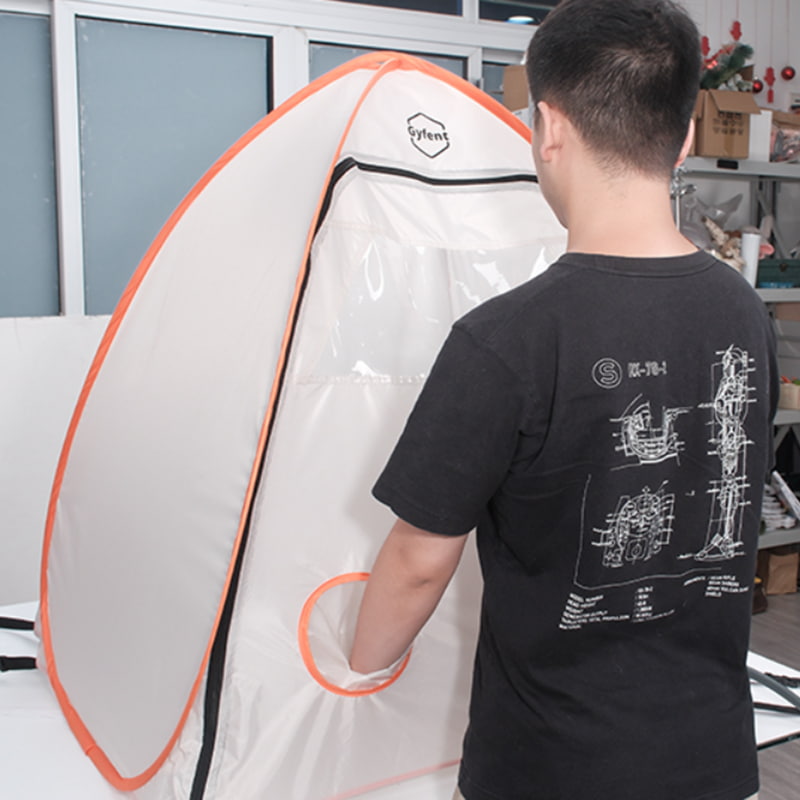 Pop-Up Portable Spray Booth and Rainproof Storage TentCompact pop-up spray booth with viewing window, turntable and rear ventilation; folds flat for small painting and protected storage tasks.View Product →
It also helps to standardise. When a programme uses one or two shelter models throughout, volunteers learn the setup once, spare parts fit every unit, and inventory becomes far easier to count.
Mistakes We See in Relief Tent Procurement
- Buying on headline price alone, then paying twice for replacements mid-season.
- Ignoring wind. Open fields and coastal sites expose tents to loads a sheltered campsite never produces.
- Forgetting ground fixings. Stakes, sandbags, and guy lines should be ordered with the tents, not afterward.
- Skipping spare parts. Poles, pegs, and repair patches cost very little compared with an unusable shelter.
- Assuming one model suits every climate. Hot, humid regions and cold, wet regions need different ventilation and fabric choices.
- Never pitching a sample. A single trial setup with the actual crew reveals more than any specification sheet.
How We Build Relief Tents at DALRMEY
Shaoxing Damei Outdoor Products is a factory, not a trading office. Our workshop near Shangyu covers more than 6,000 square metres and includes our own research and design team, administrative staff, sales office, and quality control. Around twenty skilled workers, two designers, two quality inspectors, and six sales staff handle orders that range from a single sample to full container loads.
We work in several modes: OEM and ODM for brands that bring their own designs, ready-to-ship stock for buyers who need volume quickly, and full customisation from drawings or samples. That flexibility is why our tents and umbrellas are used in the United States, South Africa, Australia, Spain, Malaysia, the Philippines, Thailand, and Italy, among other markets.
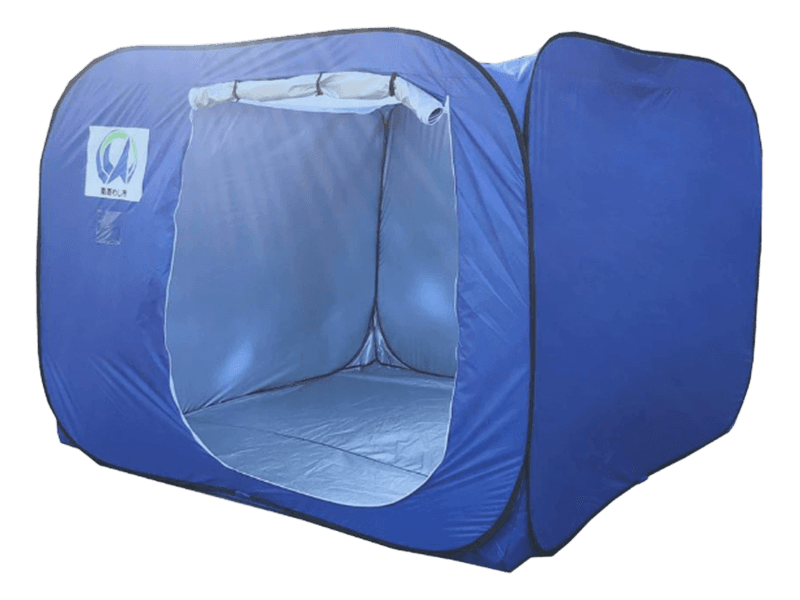 Disaster Relief Tents for Emergency Response and ResettlementFast-deploy emergency shelters with waterproof Oxford fabric, ventilation and custom sizes for command centers, temporary shelters and resettlement camps.View Product →
For readers who want to go deeper into specification choices, our team keeps a longer comparison of emergency shelters built for rapid response in our industry news section.
Ordering, Customization and Lead Times
- Tell us the use case: how long the shelter must last, how many people will sleep in it, and what the weather does on site.
- Confirm the specification: frame material, fabric weight and coating, floor type, door layout, and branding needs.
- Approve a sample. We build a production sample for inspection before the bulk order begins.
- Production and inspection. Orders move through cutting, stitching, assembly, and in-line checks by our quality team.
- Packing and labelling. Cartons, user instructions, and shipping marks are prepared to your requirements.
- Shipping and documents. We support export documentation and can coordinate with your forwarder.
Lead times depend on quantity and customisation, so the honest answer is that they vary; a clear specification list at the start is what keeps a schedule realistic.
Care, Storage and Reuse
Well-kept tents come back out of the warehouse. A few habits protect that investment:
- Dry every tent completely before packing. Stored damp fabric grows mould within days.
- Clean sand and soil off the groundsheet before folding, so abrasion does not wear through the coating.
- Label each bag with the shelter model and the date it was last inspected.
- Keep a repair kit with each batch: pole sleeves, patches, spare pegs, and a simple instruction card.
- Re-inspect at least once a year if tents sit in storage, and replace coated fabrics that have stiffened.
If you are planning a shelter programme, a stock purchase, or a custom run, we are glad to talk through the details before you commit to anything. Send us your requirements, site conditions, and target budget, and we will tell you honestly which construction makes sense for your situation and which one does not.