

 English
 中文简体
中文简体
Content
A beach umbrella is more than a shade solution — on a gusty shoreline it can become a dangerous airborne projectile if it's not up to the task. Choosing the sturdiest beach umbrella requires understanding frame materials, anchor systems, canopy engineering, and real-world wind ratings. This guide breaks it all down.
Most people buy a beach umbrella based on looks or price. But stability and structural integrity are the features that will define your entire beach experience — and your safety. Flying beach umbrellas are not a minor inconvenience; they have caused serious injuries and fatalities on beaches around the world.
A truly sturdy beach umbrella combines four elements working together: a robust anchor system, a durable pole and rib frame, a vented or aerodynamic canopy, and UV-resistant, reinforced fabric. Remove any one of these and performance drops dramatically, even on a moderately breezy day.
Unsecured beach umbrellas have injured beachgoers in accidents reported across the U.S. and Europe. Always anchor your umbrella properly according to the manufacturer's instructions and never leave it unattended in windy conditions.
The Four Pillars of a Sturdy Beach Umbrella
1. Anchor System
The anchor is the single most important element. A sand-filled base or deep auger screw keeps the umbrella grounded when gusts hit. Sand-fill systems that create 100+ lbs of resistance outperform simple pointed spikes in loose or dry sand.
2. Pole & Rib Material
Aluminum poles offer an excellent strength-to-weight ratio, while fiberglass ribs flex under wind pressure without snapping — then spring back to shape. Avoid hollow steel poles near saltwater as they corrode quickly.
3. Vented Canopy
A top vent allows wind to escape upward rather than catching the canopy like a sail. Dual-canopy designs add an extra layer of ventilation and dramatically improve stability in sustained coastal gusts.
4. Canopy Fabric
Commercial-grade polyester with a PA coating resists UV degradation and moisture. Look for UPF 50+ ratings, which block over 98% of UV rays, and reinforced double-stitched seams at the rib attachment points.
Rib Count and Frame Geometry
The number of ribs in a canopy directly affects wind resistance. Umbrellas with at least 8 fiberglass ribs perform significantly better in wind tests than those with 6 or fewer ribs. More ribs distribute stress more evenly across the canopy, preventing localized failure when a gust hits at an angle.
Pole Diameter and Locking Mechanisms
For serious wind resistance, look for poles with at least a 1.5-inch diameter. Two-piece poles — the most common design for portability — must have secure locking mechanisms that won't vibrate loose during sustained wind. A quality tilt mechanism is also essential: angling the canopy to deflect wind rather than catching it head-on significantly reduces the load on the anchor.
The Sturdiest Beach Umbrellas in 2025
Based on real-world testing conducted in coastal conditions, including sustained winds and strong gusts, the following models consistently outperform the competition on structural durability and wind resistance.
- beachBUB All-in-One Beach Umbrella System — The beachBUB is the benchmark against which all other sturdy beach umbrellas are measured. Its patented ULTRA Base fills with sand to create a 125-pound anchor — no digging, no screwing — which is why it remains standing in winds up to 44 mph in controlled wind-tunnel tests. The 7.5-foot canopy is made from commercial-grade, PA-coated polyester with double-stitched seams and wind gust vents. The heavy-duty aluminum pole with stainless-steel hardware keeps overall weight at just nine pounds. It exceeds the ASTM F3681-24 safety standard by a reported 160%, and comes with a 10-year warranty.
- Shibumi Shade — Rather than resisting wind, the Shibumi Shade is designed to harness it. The sail-like canopy flows with coastal breezes, generating lift that keeps it aloft and stable. At just two pounds, it stores in a compact pouch and provides shade coverage for up to six people, setting up in under two minutes.
- OutdoorMaster Beach Umbrella with Sand Bag — The integrated sandbag anchor system holds up to 44 lbs of sand for reliable stability on blustery days. Its 6.5-foot UPF 50+ polyester canopy features a top vent and reinforced fiberglass ribs, plus a 360-degree tilt mechanism to track the sun without repositioning the anchor.
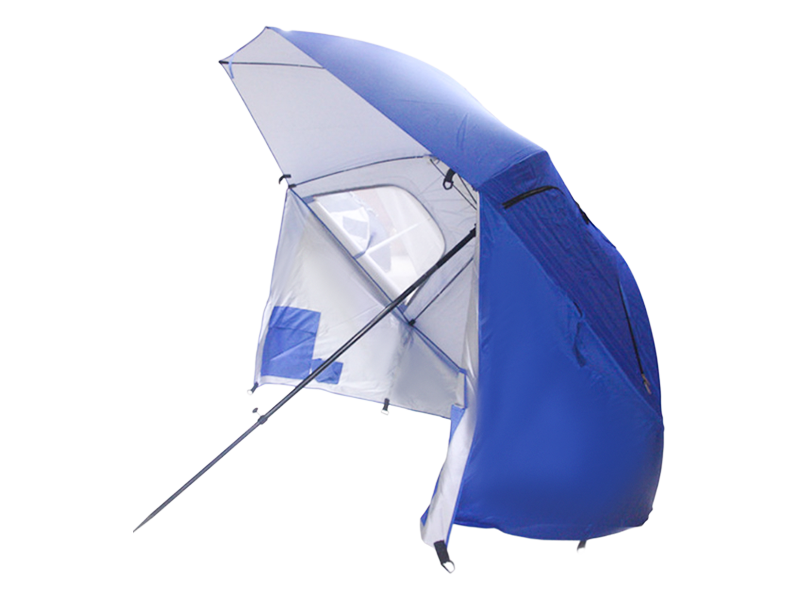
- Sport-Brella Versa-Brella — A tent-umbrella hybrid delivering exceptional coverage and ground-level stability. The wide canopy provides side shade not found in conventional round umbrellas, and ground stakes offer multiple anchor points — ideal for families who want full-perimeter coverage with a simple setup.
How to Anchor Any Beach Umbrella Properly
Even the sturdiest beach umbrella will fail if it's improperly installed. The most common mistake is simply pushing the pole straight down into dry, loose sand — this creates almost no resistance. Here's how professionals anchor correctly:
- Choose damp, compacted sand closer to the waterline when possible; it provides far greater grip.
- For auger-style anchors, insert at a slight angle (10–15°) into the wind rather than straight down. This creates a counterforce against the wind's push.
- For sand-fill base systems like the beachBUB ULTRA Base, add sand until the measurement markers confirm maximum ballast weight.
- After inserting the pole, push and twist it in a corkscrew motion to compact the surrounding sand tightly around the shaft.
- Use the tilt mechanism to angle the canopy away from the wind — this reduces the sail effect and lowers stress on the anchor.
- Regularly check anchor security; wind conditions and tidal shifts change quickly on the beach.
- Never leave the umbrella unattended in gusty or changing weather conditions.
For screw-style auger anchors, industry guidance recommends burying the anchor to a minimum depth equal to half the pole length. In practice, this means at least 18–24 inches for a standard 7-foot umbrella pole. Shallow anchoring is the single most common cause of beach umbrella failure in moderate wind.
What to Look for When Buying: A Quick Reference
Frame Material
Fiberglass is widely considered the most durable framing material available for beach umbrellas. It is lightweight, strong, and softer than aluminum when it flexes — meaning it bends without breaking under sudden gusts and returns to its original shape. Aluminum poles with fiberglass ribs represent the gold standard combination: corrosion-resistant, weight-efficient, and structurally resilient. Avoid hollow steel poles in marine environments, as salt air accelerates rust and weakens structural integrity within a single season.
Canopy Size and Venting
Canopy diameter ranges from 6.5 feet (personal use) to 9 feet or more (commercial/family). A 7.5-foot canopy is the sweet spot for most beachgoers, offering adequate shade for two to three people while remaining manageable in wind. Any umbrella used in a coastal environment should feature at least one top vent; dual-canopy venting systems perform best in sustained wind scenarios.
UPF Rating
UV protection is non-negotiable. A UPF 50+ rating blocks over 98% of both UVA and UVB radiation — the minimum standard you should accept. Note that UPF ratings can degrade with washing, heavy use, and prolonged UV exposure; inspect the fabric each season and replace canopies showing signs of thinning or fading.
Weight and Portability
The sturdiest umbrellas tend to weigh 7–10 pounds, balancing structural robustness with the practicality of carrying it across the beach. Look for carrying bags with padded shoulder straps that distribute weight comfortably. Systems that include a sand shovel, anchor bag, and towel hook bundled into a single carrying case offer the best all-in value.
Warranty and Build Quality
A manufacturer's warranty is a direct signal of build confidence. Budget umbrellas typically carry no warranty or a 90-day guarantee; the sturdiest models back themselves with multi-year to lifetime warranties. Inspect hardware closely at the point of purchase: stainless-steel rivets and connection joints resist corrosion far better than zinc or plain steel hardware.
The Bottom Line
The sturdiest beach umbrella is not simply the heaviest or the most expensive — it is the one that combines a well-engineered anchor system, a flexible fiberglass rib frame, a vented canopy, and UV-grade fabric into a cohesive system designed for real coastal conditions.
The beachBUB All-in-One System remains the top recommendation for most beachgoers who want maximum wind resistance and long-term durability. If lightweight portability is your priority, the Shibumi Shade is a brilliantly unconventional alternative. For families on a budget, the OutdoorMaster with Sand Bag delivers reliable performance without a premium price tag.
Whichever model you choose, always anchor it correctly, tilt the canopy into the wind, and never leave it unattended. The sturdiest umbrella in the world is only as safe as the person who sets it up.