

 English
 中文简体
中文简体


Content
- 1 What Vent Design Actually Determines in a Beach Umbrella
- 2 How Air Pressure Builds Beneath an Unvented Canopy
- 3 Fabric Density and Frame Material Work Alongside Vent Placement
- 4 Wind Tolerance by Vent Configuration
- 5 Anchoring Still Matters Once the Canopy Vents Properly
- 6 Common Settings Where Wind-Rated Umbrellas Are Used
What Vent Design Actually Determines in a Beach Umbrella
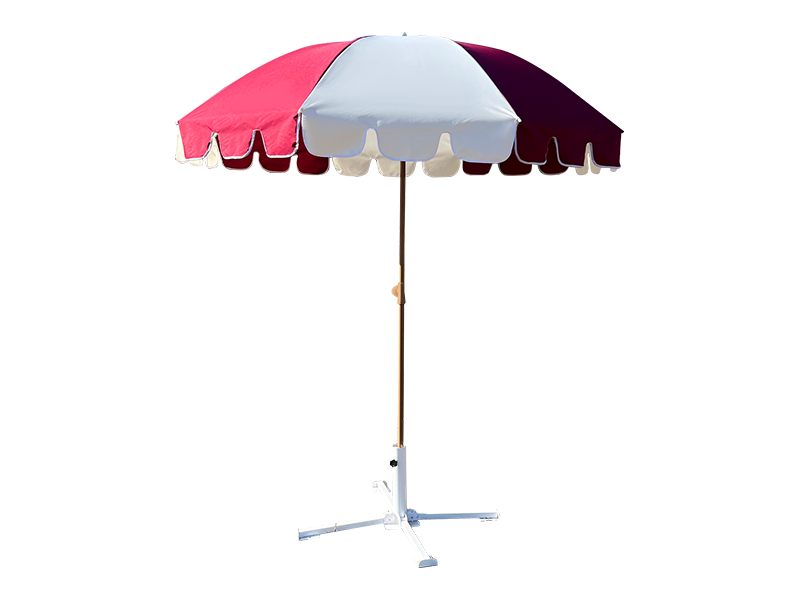
Vent design is the factor that separates a portable beach umbrella that stays upright through a coastal afternoon from one that inverts or snaps within a single gust. A canopy without vents behaves like a sail, trapping air beneath it as wind pushes upward, and once internal pressure exceeds what the ribs can resist, the frame flips inside out or the pole lifts free of the sand. A vented canopy allows a portion of that trapped air to escape through a cut panel near the crown, releasing pressure before it reaches the point of structural failure. Field testing on umbrella frames commonly shows that a vented design can extend stable wind tolerance from around 15 to 18 miles per hour up to 25 to 30 miles per hour before the canopy begins to distort, which covers the range of gusts typical along open coastlines during a normal beach day.
How Air Pressure Builds Beneath an Unvented Canopy
When wind meets a solid canopy surface, air does not simply pass around it the way it would around a smaller object. Instead, a portion of that airflow gets forced underneath the fabric, and because the canopy edge is sealed all the way around, that air has nowhere to go. Pressure accumulates against the underside of the dome, and the force multiplies with wind speed rather than increasing at a steady rate, which is why an umbrella that seems stable at 12 miles per hour can fail abruptly once gusts climb past 20. This buildup places stress directly on the rib joints and the connection point where the canopy meets the pole, both of which are the weakest structural points in a typical frame.
A vent panel interrupts this cycle by giving the trapped air a controlled exit path. Rather than pressure building until something gives way, air flows through the vent opening continuously, which keeps internal pressure closer to equilibrium with the surrounding atmosphere. The result is a canopy that flexes slightly with gusts instead of ballooning against them, reducing the load transferred to the ribs and pole connection during sustained coastal wind.
Fabric Density and Frame Material Work Alongside Vent Placement
Vent openings do not function in isolation from the rest of the umbrella's construction. Canopy fabric on portable beach umbrellas is generally a high-density polyester weave rated at UPF50+, which blocks a large share of ultraviolet exposure while also holding a tight enough weave to resist tearing at the vent seam under repeated flexing. A looser weave around the vent opening tends to fray faster, which gradually enlarges the vent beyond its designed dimensions and changes how much air actually passes through during a gust.
Aluminum Alloy Versus Fiberglass Ribs
Frame ribs are typically built from either aluminum alloy or fiberglass, and the choice affects how the structure responds once the vent has done its work of reducing pressure. Aluminum alloy ribs hold their shape under moderate load and resist corrosion in salt air, which matters for equipment used repeatedly at the coast. Fiberglass ribs flex further before reaching their breaking point, absorbing sudden gusts through bending rather than rigid resistance, though this flexibility can shorten the working life of the joint where the rib meets the canopy if gusts are frequent. Many mid-range beach umbrellas pair a fiberglass rib structure with an aluminum alloy center pole, combining flexible outer support with a stable vertical anchor point.
Wind Tolerance by Vent Configuration
Comparative testing across common canopy configurations gives a useful picture of how vent design changes practical wind tolerance for a standard beach umbrella pole diameter and canopy size.
| Canopy Type | Stable Wind Range | Typical Failure Point |
|---|---|---|
| No vent, sealed canopy | Up to 15 mph | Canopy inversion |
| Single top vent | 18–22 mph | Rib joint stress fracture |
| Dual vent with mesh panel | 25–30 mph | Pole lift from sand anchor |
These figures shift depending on canopy diameter and how the umbrella is anchored, but the pattern is consistent: adding a second vent or replacing a solid panel with mesh raises the wind threshold at which the umbrella begins to show stress, shifting the point of failure away from the canopy fabric itself and toward the anchoring system instead.
Anchoring Still Matters Once the Canopy Vents Properly
A well-vented canopy reduces the force transferred to the pole, but it does not eliminate the need for a secure base in loose sand. Once vent design has lowered the pressure load on the frame, the remaining stress travels down the pole to whatever anchoring mechanism holds it in place, whether that is a screw-style auger, a sand-filled base, or a weighted bag. Umbrellas that combine effective venting with a shallow or lightweight anchor often still shift position during sustained gusts, since the vent addresses air pressure on the canopy rather than the umbrella's resistance to being dragged across loose ground.
A properly vented canopy paired with an aluminum alloy or fiberglass frame and a securely driven sand anchor can maintain a stable position through sustained coastal wind, reducing the setup uncertainty that often comes with beach umbrella use in open, exposed locations.
Common Settings Where Wind-Rated Umbrellas Are Used
Vented portable beach umbrellas show up across a range of outdoor settings beyond a single afternoon at the shoreline. Open beaches with limited natural windbreaks present a particularly demanding environment, since there is little surrounding structure to slow gusts before they reach the canopy. Beach campsites present a related but slightly different case, where the umbrella may stay in position for multiple days and needs to hold up against changing wind direction rather than a single sustained gust from one side. Outdoor leisure areas near coastal boardwalks, waterfront cafes, and rental equipment stands also rely on vented canopies, since these locations combine open exposure with frequent, repeated use across many visitors in a single season.
Businesses that rent or provide umbrellas as part of a beachfront service often favor vented frames specifically because the reduced failure rate cuts down on replacement costs across a rental fleet, and canopies can typically be produced with custom printed branding without altering the underlying vent structure or wind performance. Standardized assembly production allows these frames to be manufactured at consistent quality across large order volumes, which keeps replacement parts interchangeable when a rib or pole section needs to be swapped after seasonal wear.