

 English
 中文简体
中文简体
Content
- 1 Why Shade Is Not the Same Thing as a UV Barrier
- 2 What a UPF Rating Really Tells You
- 3 Where the UV Under Your Umbrella Comes From
- 4 Fabric, Colour and Canopy Shape
- 5 How Much Protection Do You Actually Get?
- 6 Practical Ways to Cut UV Under an Umbrella
- 7 Choosing an Umbrella That Earns Its Place in the Sun
- 8 Quick Answers to Common Questions
- 9 Matching the Canopy to the Place
Yes, you can get sunburned under an umbrella — even a large one, even a well-made one. We build beach umbrellas and patio umbrellas for a living, and every summer we hear the same story: someone spent the afternoon under a canopy, felt completely shaded, and still went home with pink shoulders and a red nose. The umbrella was not faulty. What failed was the assumption that shade means zero ultraviolet exposure. Shade lowers UV. It never removes it entirely.
Why Shade Is Not the Same Thing as a UV Barrier
Ultraviolet radiation reaches your skin through three main routes. The first is direct sunlight straight from the sun, and this is the route a canopy handles best. The second is diffuse radiation, scattered across the sky and arriving from every direction, including from behind you and from below the edge of the fabric. The third is reflection, bouncing up off sand, water, pale concrete or any bright surface nearby. An umbrella blocks the first route reliably. The other two keep working whether you notice them or not.
Sun angle matters just as much as fabric. Around midday the shadow sits almost directly beneath the canopy, which means your shoulders, arms and legs may sit outside it even while your face is in the dark. In the morning and late afternoon the sun comes in low and slides straight under the rim. Tilting the canopy helps, but a tilted umbrella always leaves one side of your body exposed.
What a UPF Rating Really Tells You
UPF stands for Ultraviolet Protection Factor, and it describes how much UV passes through a fabric. A UPF 50 rating means roughly one fiftieth — about two percent — of the UV hitting the material gets through. That sounds close to total protection, and for the fabric itself, it is.
The catch is that a UPF number is measured under laboratory conditions: new fabric, dry, flat, with UV striking it straight on. Real umbrellas are stretched over frames, stitched at seams, perforated by vents and used season after season in wind and salt air. More importantly, the rating describes the fabric, not the world around it. A perfectly rated canopy still cannot stop UV bouncing off the sand beneath you or scattering in from the open sky at the edge of the shadow.
Where the UV Under Your Umbrella Comes From
Reflected radiation is the part people underestimate most. Bright surfaces send UV upward into your face, the underside of your arms and the tops of your feet. The rougher and brighter the ground, the more light bounces back at you.
| Surface | UV reflected (approximate) |
|---|---|
| Dry pale sand | 15-25% |
| Water surface | 10-30% |
| Concrete and light paving | 10-30% |
| Grass and turf | 1-5% |
| Snow | Up to 80% |
This is why a beach is one of the easiest places in the world to burn. Sand throws a serious share of UV upward, the sea adds more, and there is nothing on the horizon to interrupt the sky's scattered light. Sitting under a beach umbrella cuts your exposure substantially, but the number is nowhere near zero.
Fabric, Colour and Canopy Shape
Not every canopy performs the same way. Four things decide how much UV a sun umbrella genuinely stops.
- Weave density. Tightly woven polyester blocks far more UV than a loose, open weave.
- Coating. A dark rubber or silver layer on the underside of the fabric adds real protection, though it wears at folds and stress points over time.
- Colour. Darker fabric absorbs more UV, which helps. Light colours feel cooler underneath but can let more through unless the weave and coating compensate.
- Shape and size. A wider canopy with a lower edge covers more of your body. Wind vents and gaps improve stability but also leak light.
For a shoreline, a generous canopy that can be angled into the sun usually beats a small vertical one, even when both are made from the same rated fabric.
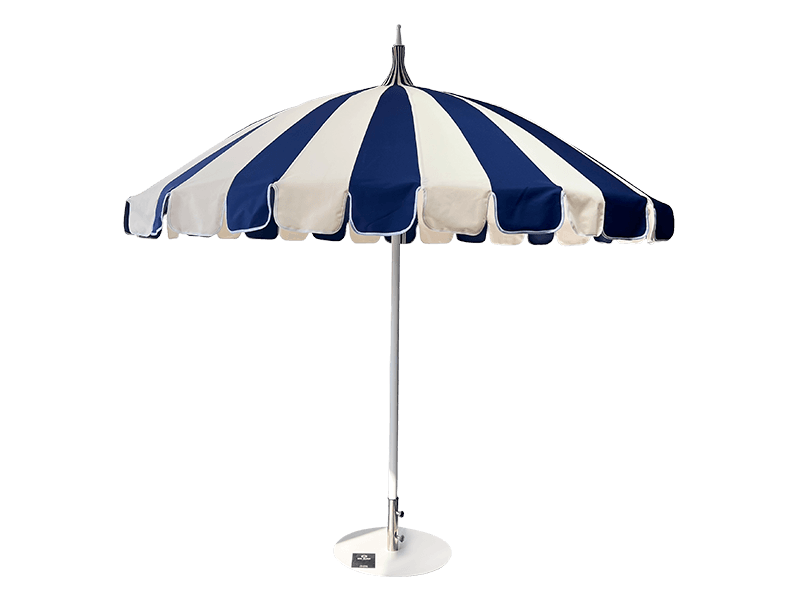
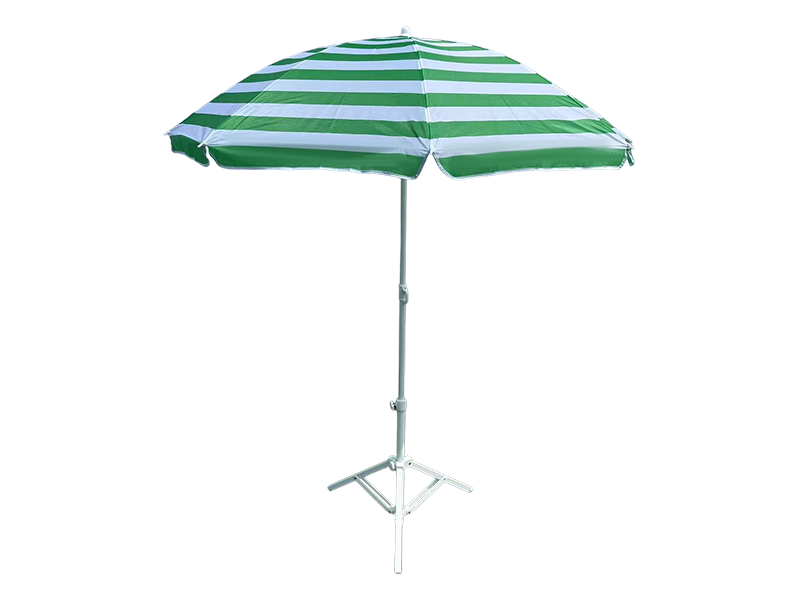 Regular Beach Umbrellas for Shoreline and Outdoor ShadeWholesale regular beach umbrellas with UPF50+ polyester canopies, aluminum or fiberglass frames, bulk stock, and custom logos for beach, campsite, and poolside shade.View Product →
How Much Protection Do You Actually Get?
Readings taken under umbrellas on sunny days commonly land somewhere between ten and fifty percent of full sun — higher at the edge of the shadow, lower in the dead centre. Shade therefore extends the time it takes to burn. It does not make burning impossible.
It is better to think of an umbrella as a delay rather than a shield. If unprotected skin would burn in twenty minutes, decent shade may stretch that to an hour or more. That is a real improvement, and it is still only an hour. Few people sit under a beach umbrella for an hour and then pack up and go home.
Practical Ways to Cut UV Under an Umbrella
- Apply a broad-spectrum sunscreen at SPF 30 or higher, and reapply every two hours, plus after swimming or heavy sweating.
- Wear a wide-brimmed hat, sunglasses and a UPF-rated shirt. Clothing covers what the canopy misses.
- Choose an umbrella with a stated UPF rating instead of trusting colour alone.
- Angle the canopy towards the sun and shift it as the shadow moves through the day.
- Anchor the pole properly. An umbrella that tips over leaves you fully exposed, so pair the canopy with a screw-in sand base or weighted anchor suited to the ground beneath it.
- Take a break from direct sun between late morning and mid-afternoon, when UV is strongest.
- Never trust cloud cover. Thin cloud passes most UV through, and overcast days at the coast still burn people every season.
These habits add up. The many names given to sun umbrellas — parasol, beach umbrella, patio umbrella, market umbrella — all describe the same job, and none of them removes the need for the steps above.
Choosing an Umbrella That Earns Its Place in the Sun
When you are buying, look past the colour and the photograph. Check whether the canopy carries a stated UPF rating and whether the seller can point to a test report. Feel the fabric: if daylight shows through as pinholes, UV is getting through as well. Inspect the frame, because a canopy that folds in the first breeze protects nobody. And check the base, because an umbrella that stands still is the only umbrella that works.
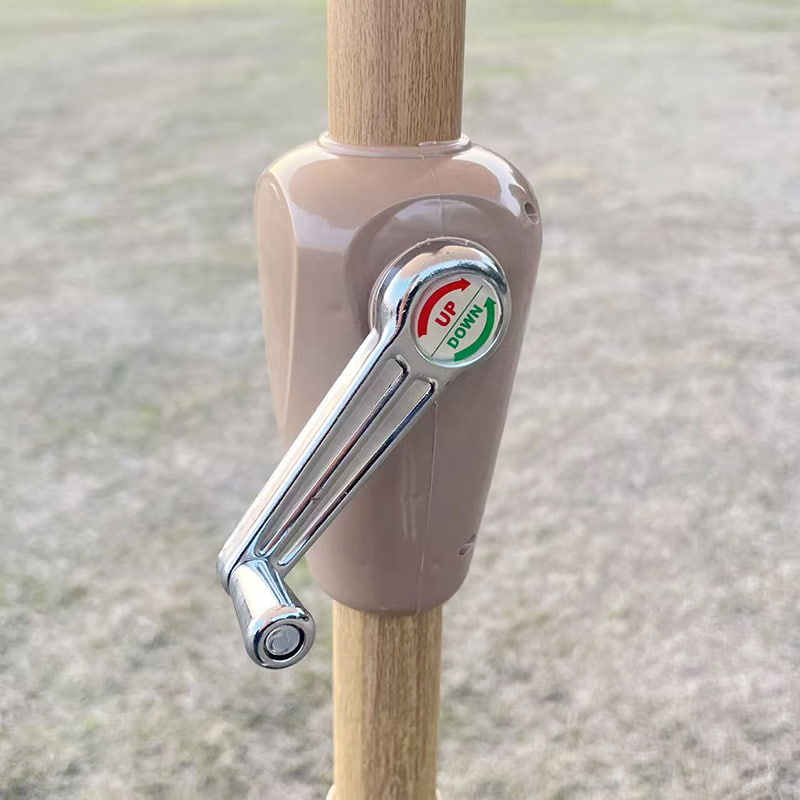 2.8M Hand-Cranked Landscape Umbrella with Fiberglass RibsA 2.8 m customizable patio umbrella with fiberglass ribs, tilting zinc alloy mechanism, UV protection, and stable round base for terrace or commercial shade.View Product →
Quick Answers to Common Questions
Can you get sunburned under a UPF 50+ umbrella?
Yes. The fabric blocks most direct UV, but reflected and scattered radiation still reaches your skin. Long afternoons on sand or beside water remain risky.
Do darker umbrellas block more UV?
Darker fabric absorbs more UV than pale fabric of the same weave, but weave and coating matter more than colour alone. Dark canopies also feel noticeably warmer underneath.
Can an ordinary rain umbrella work as a sun umbrella?
Sometimes, for short periods. Most rain umbrellas carry no UV rating, no protective coating and fairly thin fabric. They are better than nothing and clearly worse than a tested sun canopy.
Is sunscreen enough without shade?
It is one layer of a routine, not the whole routine. Sunscreen, clothing, a hat and a canopy each catch part of the exposure you would otherwise absorb.
Do you still need protection on a cloudy day?
You do. Cloud softens the light but lets a large share of UV through, and scattered radiation can even increase at the edges of the shadow.
Matching the Canopy to the Place
A beach umbrella, a terrace umbrella and a market umbrella are built for different ground and different wind. On sand you want a pole that can be driven deep and a canopy that tilts into the sun. On a paved terrace you want a heavy base and a crank or pulley so one person can open it. In a small courtyard, where space is tight and storage matters, a compact canopy with a tilt joint is often all you need, and it folds away far more easily at the end of the day.
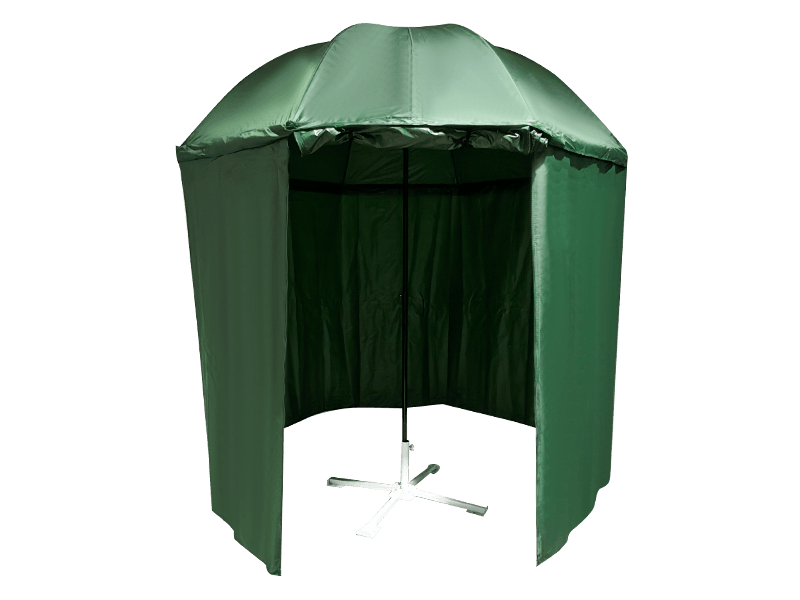
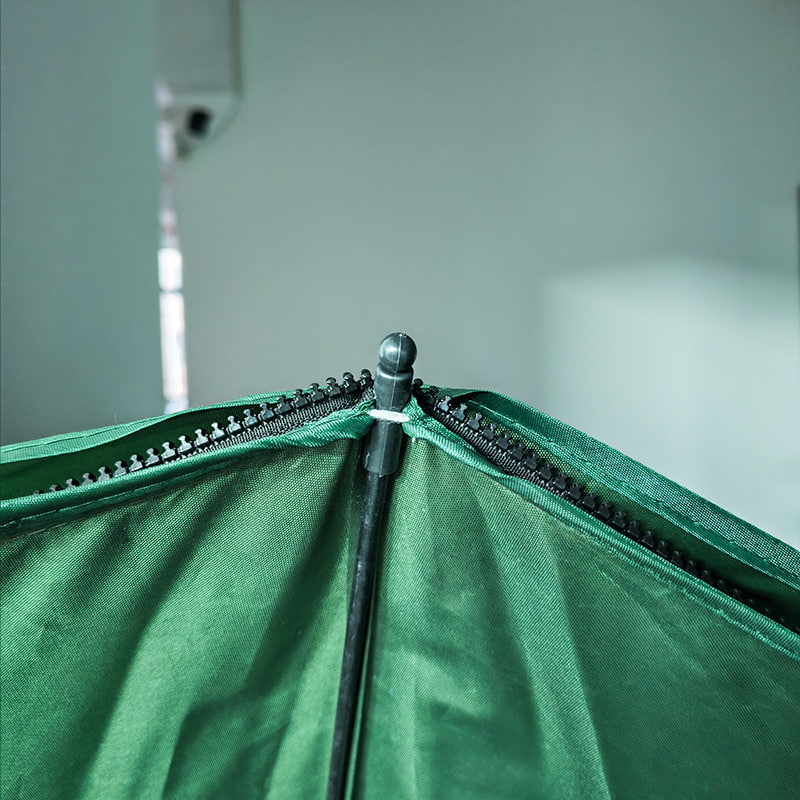 2.2M Military Green Canopy Umbrella and Integrated TentA 2.2 m umbrella-tent hybrid with waterproof Oxford fabric, PVC windows, fiberglass frame, and one-person setup for camping, fishing, or market stalls.View Product →
So the honest answer to the question is this: an umbrella reduces your UV dose, often a great deal, but it never takes it to zero. If you are planning a long day outdoors, treat the canopy as one piece of a routine that also includes sunscreen, clothing, sunglasses and a bit of common sense about timing. That combination is what keeps people comfortable from morning until the light softens in the evening.