

 English
 中文简体
中文简体



Two technologies have fundamentally changed how campers pitch a shelter: automatic pop-up tents that spring open in seconds, and inflatable tents that pressurized air beams transform from a folded bundle into a rigid structure in under two minutes. Both claim to solve the same frustration -- slow, fiddly traditional setup -- but they solve it differently, with different trade-offs for weight, durability, weather performance, and cost. This guide examines both formats in depth so you can make a clear-headed choice for your style of camping.
Understanding How Each System Works
Before comparing performance, it helps to understand the mechanisms behind each format, because the engineering decisions made at the design stage flow directly into the advantages and limitations you experience in the field.
Automatic Setup Tents: Spring-Frame Mechanics
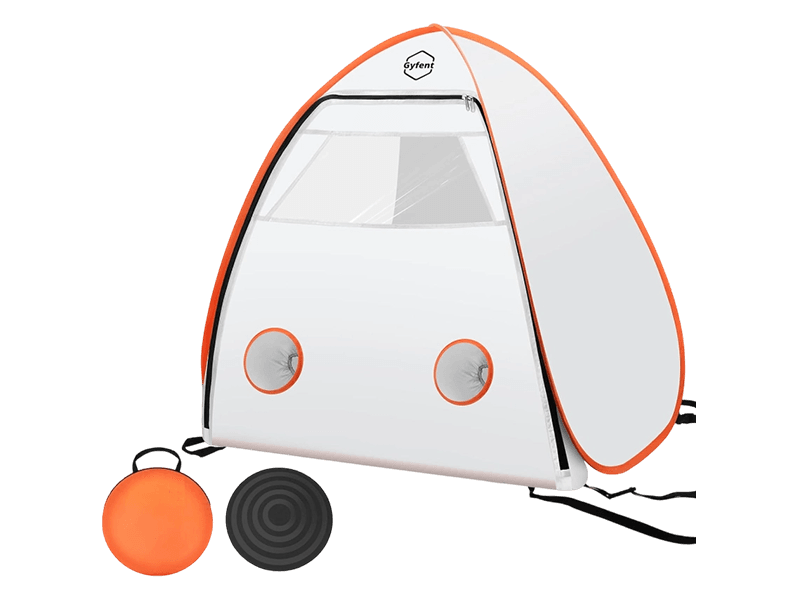
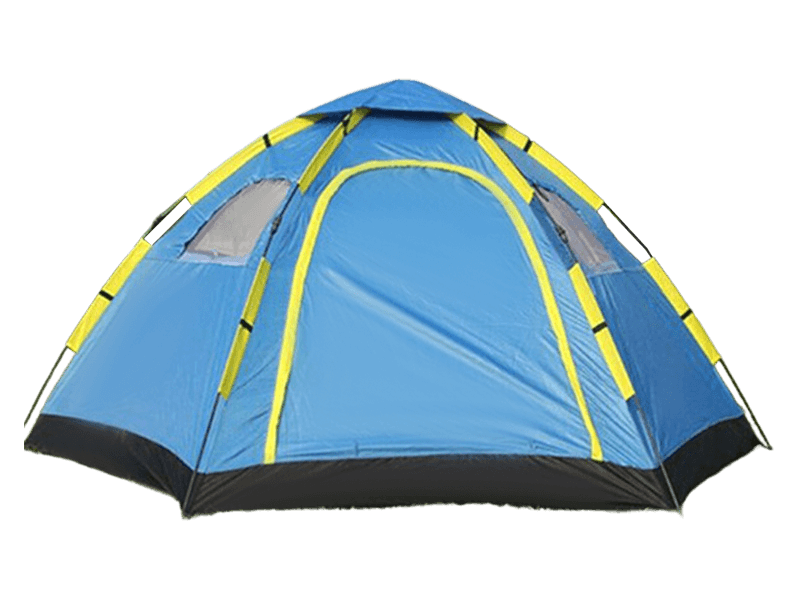
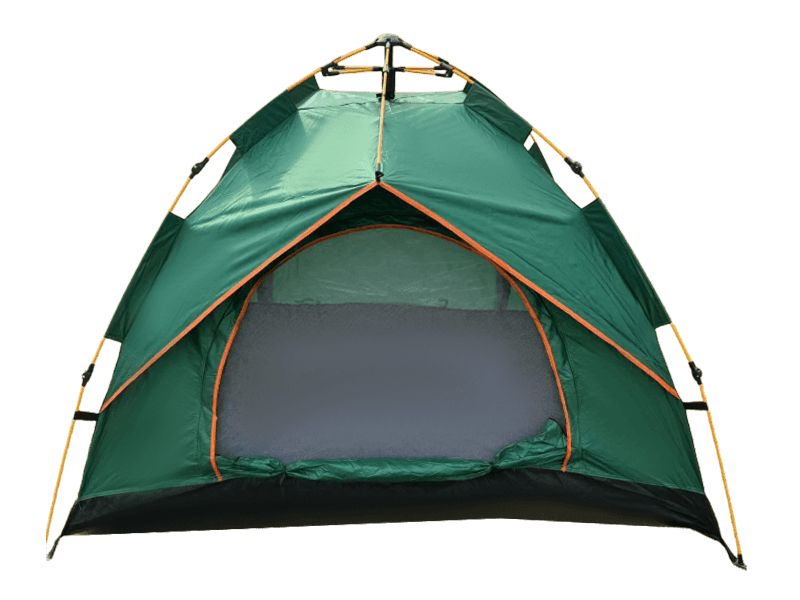
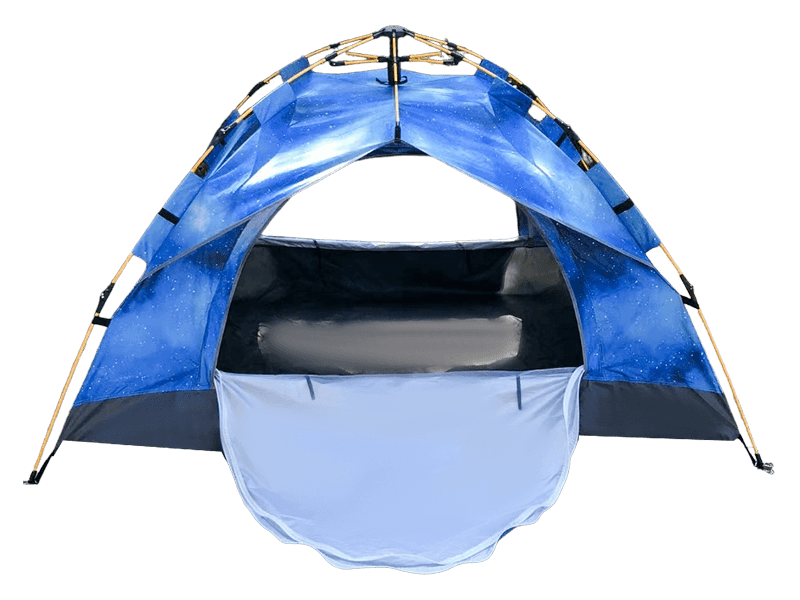
Automatic or pop-up tents use pre-tensioned fiberglass or steel wire frames that are coiled into a flat disc when packed and released by unclipping a restraint. The elastic energy stored in the coiled frame causes the tent to spring into its three-dimensional shape instantly -- typically in two to five seconds for a solo or two-person model. No assembly, no threading of poles through sleeves, no clips to attach.
The same spring mechanism that makes setup effortless makes packdown the notorious challenge of this format. Collapsing a pop-up tent requires folding the frame back into its coiled disc shape, a technique that takes most first-time users multiple attempts and considerable frustration. Once learned, the packdown takes roughly 30 to 60 seconds -- but it never becomes truly effortless the way setup is.
Inflatable Tents: Air Beam Architecture
Inflatable tents replace rigid poles entirely with sealed tubular air beams integrated into the tent fabric. A pump -- hand-operated, electric, or built-in -- pressurizes these beams to between 5 and 9 PSI, at which point the structure becomes rigid enough to support the tent shell, withstand wind loading, and maintain its geometry under load. Deflation is equally simple: open the valves and the tent collapses flat for packing.
The absence of rigid components means there are no joints to snap, no poles to bend, and no sleeves to tear during assembly. A puncture causes gradual pressure loss rather than sudden structural failure -- a meaningful safety advantage in exposed conditions. The engineering trade-off is weight: pump hardware, reinforced bladders, and thicker fabric add mass that well-designed pole tents avoid.
Head-to-Head: Key Performance Categories
Choosing between these two formats requires weighing the same criteria you would apply to any tent purchase -- setup speed, weather resistance, weight, pack size, durability, and cost -- but both technologies score very differently across those categories compared to each other and compared to traditional pole tents.
- Instant 2-5 second setup with no training
- Lower purchase price at equivalent sizes
- Lighter weight for the same floor area
- No pump required or carried
- Compact flat-disc packed profile
- Easier to find at mainstream retailers
- No rigid parts to snap, bend, or lose
- Superior wind and snow load resistance
- Larger floor plans without structural compromise
- Gradual failure mode rather than sudden collapse
- Easy and intuitive packdown
- Better thermal separation at connection points
Setup and Packdown Convenience
Setup speed is where automatic tents are unbeatable. Unclip, toss, done. This is genuinely useful when you arrive at a site in darkness or rain, when you have children with you, or when you are camping solo and lack a second pair of hands. The inflatable tent, at 60 to 120 seconds with a pump, is still dramatically faster than most pole tents -- but the difference between two seconds and 90 seconds can feel significant in bad weather.
Packdown reverses the comparison sharply. Deflating an inflatable tent, rolling it loosely, and returning it to its bag is intuitive and quick -- usually under five minutes. Folding a pop-up tent correctly requires a specific three-step coiling technique that can take beginners 10 to 15 minutes of struggling. Even experienced users rarely pack a pop-up tent in under two minutes.
Weather Resistance
Inflatable tents hold a clear structural advantage in wind. Air beams flex slightly under gusts and return to shape without the snap-failure risk that affects fiberglass poles. High-quality inflatable designs from brands including Vango, Robens, and Heimplanet are wind-rated to 80 to 100 km/h -- significantly higher than most pop-up designs, which are rarely rated above 50 to 60 km/h and are generally unsuitable for exposed coastal or mountain sites.
The spring-frame design of automatic tents inherently limits their structural geometry. Because the frame must coil flat, the arcs are shallower and the frame cross-section is fixed by the coil spring tension rather than designed for optimal wind performance. Most pop-up tents are explicitly designed for sheltered, fair-weather camping: festivals, beach days, mild campsite nights.
Inflatable tents flex with gusts rather than fighting them -- the same principle that makes suspension bridges survive storms that would destroy rigid structures. Pop-up tents, by contrast, rely on spring tension that has no adaptive response to sustained loading.
Weight and Pack Size
Here automatic tents win clearly, particularly for single or double occupancy. A quality two-person pop-up tent typically weighs 1.8 to 2.8 kg. An inflatable two-person tent of comparable floor area and weather rating typically weighs 3.5 to 5.5 kg -- the pump, heavier beams, and reinforced valves add significant mass. For backpackers or cycle tourers, this difference is decisive. For car campers and families driving to a site, it is largely irrelevant.
Pack size follows a similar pattern with an interesting inversion. Pop-up tents pack to a flat disc that is typically 60 to 80 cm in diameter -- awkward to fit into a rucksack, though it ties easily onto a pack exterior. Inflatable tents pack to a rectangular cylindrical bag that is bulkier in absolute volume but easier to fit into a vehicle boot or large pack due to its stackable shape.
| Category | Automatic Pop-Up | Inflatable | Winner |
|---|---|---|---|
| Setup speed | 2-5 seconds | 60-120 seconds | Automatic |
| Packdown ease | Difficult, technique-dependent | Simple, intuitive | Inflatable |
| Wind resistance | 50-60 km/h typical max | 80-100 km/h rated | Inflatable |
| Weight (2-person) | 1.8-2.8 kg | 3.5-5.5 kg | Automatic |
| Interior headroom | Limited by spring geometry | Excellent, near-vertical walls | Inflatable |
| Failure mode | Sudden (frame snap) | Gradual (slow leak) | Inflatable |
| Repairability | Difficult in field | Easy (patch kit) | Inflatable |
| Entry price (2-person) | 30-150 EUR | 250-600 EUR | Automatic |
| Long-term durability | Moderate (frame fatigue) | Good (bladder aging) | Comparable |
Durability, Maintenance, and Repairability
Long-term ownership experience differs meaningfully between these two technologies, and understanding the likely failure modes before purchase helps set realistic expectations.
How Automatic Tents Wear and Fail
The coil spring frame of a pop-up tent is the component most likely to limit its service life. Fiberglass frames can develop micro-fractures after repeated coiling cycles, eventually leading to a crack or shard that punctures the sleeve or injures the user. Steel wire frames are more durable but heavier. In either case, replacement frames are rarely sold separately by manufacturers -- a broken frame often means replacing the entire tent, which is a poor outcome for sustainability and cost.
The fabric of pop-up tents is typically lighter than that of inflatable models, which can mean faster UV degradation and lower waterproof ratings. Many entry-level pop-up tents have hydrostatic head ratings below 1,500 mm -- adequate for light rain but insufficient in persistent downpours.
How Inflatable Tents Wear and Fail
The primary wear point in an inflatable tent is the TPU bladder inside each air beam. Over time -- typically after five to ten years of regular use -- the bladder material can become brittle, lose its elasticity, or develop pin-hole leaks at stress points near valves. Good manufacturers sell replacement bladders for their beam profiles, making major repairs possible without replacing the entire shelter.
Field repair of a puncture is straightforward: a standard patch kit (included with most quality inflatable tents) can seal a hole in under five minutes. Valve leaks, the second most common issue, can often be addressed with a valve core tool. Neither repair requires specialist skills or tools.
- Always store inflatable tents completely dry -- residual moisture inside bladders promotes mildew and material degradation.
- For pop-up tents, apply silicone lubricant to frame joints twice per season to reduce fatigue cracking at movement points.
- Carry a patch kit specifically sized for air beam diameter; universal patches often fail to bond properly on curved surfaces under pressure.
- Reproof outer fly fabric annually with DWR spray to maintain water repellency as factory coatings wear from UV exposure.
- Never store a pop-up tent coiled for longer than a single season without releasing it flat for at least 24 hours to reduce frame fatigue.
Which Camping Situations Suit Each Type
The clearest way to resolve the automatic versus inflatable question is to match the technology to the specific camping context you are planning for. Neither format is universally superior -- each has a set of conditions where it clearly outperforms the other.
Festival camping prioritises speed, low cost, and minimal faff. A pop-up tent that deploys in two seconds and costs under 50 EUR is ideal. Weather exposure is typically low and wind is rarely a factor on managed festival sites.
Families benefit from the larger interior volumes, near-vertical walls, and intuitive packdown that inflatable designs offer. Weight is not a constraint when loading a vehicle boot, and weather reliability matters more across multi-night stays.
Sustained wind above 60 km/h will stress or collapse most pop-up designs. An air-beam tent rated to 80-100 km/h with full guy-line points handles coastal gales and elevated campsites that would be unsuitable for automatic alternatives.
For UV shelter during a single day out, a beach pop-up shelter weighing under 1 kg and fitting in a carry bag is unbeatable. There is no meaningful reason to carry an inflatable system for non-overnight use in calm conditions.
Weight and pack shape matter enormously when carrying a tent on your back for hours. Lightweight pop-up designs in the 1.5-2 kg range offer faster setup than ultralight pole tents with minimal weight penalty over inflatable options.
When camping from a vehicle, the weight advantage of the automatic tent disappears entirely. Inflatable basecamp tents create large, robust shelters with exceptional weather protection that automatic designs simply cannot match at equivalent floor areas.
Cost Considerations: Entry Price vs. Lifetime Value
The price gap between these two technologies is significant enough to be a deciding factor for many buyers. Entry-level automatic pop-up tents start below 40 EUR and are widely available. Quality inflatable tents for two people rarely fall below 300 EUR, and expedition-grade models from Vango, Outwell, or Heimplanet often exceed 700 EUR.
Lifetime value calculations complicate the comparison. A 50 EUR pop-up tent that lasts three seasons before frame failure has a per-season cost of around 17 EUR. A 500 EUR inflatable tent maintained properly over ten seasons costs 50 EUR per season -- comparable on a per-use basis once the higher quality of the camping experience is factored in. For infrequent campers who go out two or three times a year, the automatic tent remains better value. For families or enthusiasts who camp ten or more nights annually, the investment in an inflatable tent is likely to pay back in experience quality and reliability.
What to Look for When Buying Either Type
Regardless of which format you choose, several specifications separate quality products from poor-value options that will disappoint in the field.
- Waterproof rating: look for a minimum 3,000 mm hydrostatic head on the fly and 5,000 mm on the floor for reliable all-weather performance.
- Seam sealing: taped seams (heat-bonded tape over stitching) outperform factory-sealed seams, which can separate over time.
- Ventilation: a tent without mesh inner panels or adjustable vents will accumulate condensation regardless of fly breathability.
- Guy line points: at least six anchor points on a two-person tent; eight or more on anything designed for exposed sites.
- For inflatable tents: confirm that replacement bladders are sold separately before purchasing, ensuring long-term repairability.
- For automatic tents: test the coiling packdown in store or at home before your first trip -- the technique varies by model and is non-obvious.
If you camp primarily at festivals, beaches, and managed campsites in mild weather, and if budget and weight matter, an automatic pop-up tent is the right tool. Setup cannot be beaten for speed, and the lower cost means a damaged tent is not a major financial setback.
If you camp in variable or exposed weather, stay for multiple nights, travel by car, or have a family to shelter, an inflatable tent will serve you better across every metric that matters for comfortable, reliable camping: headroom, wind resistance, packdown ease, and long-term repairability. The higher entry cost is real, but so is the performance gap.
The two technologies are not direct competitors -- they serve different campers in different conditions. Understanding which profile fits your actual camping habits is the most useful outcome of this comparison.
Making the Right Choice for Your Camping Style
Automatic setup and inflatable tents represent two genuinely different philosophies of portable shelter. The pop-up tent optimises for a single moment -- the instant of deployment -- and accepts trade-offs in every other dimension. The inflatable tent distributes its convenience across the full camping experience: faster-than-pole setup, superior weather performance, intuitive packdown, and easier long-term maintenance.
Neither technology has rendered the other obsolete, and neither is likely to. The best tent for your next trip is the one matched to where you are going, how you are getting there, what the weather might do, and how much you want to spend. Use the scenario guidance above as your starting point, prioritise the specifications that reflect your real camping conditions, and you will arrive at a choice that serves you well -- whichever direction you go.